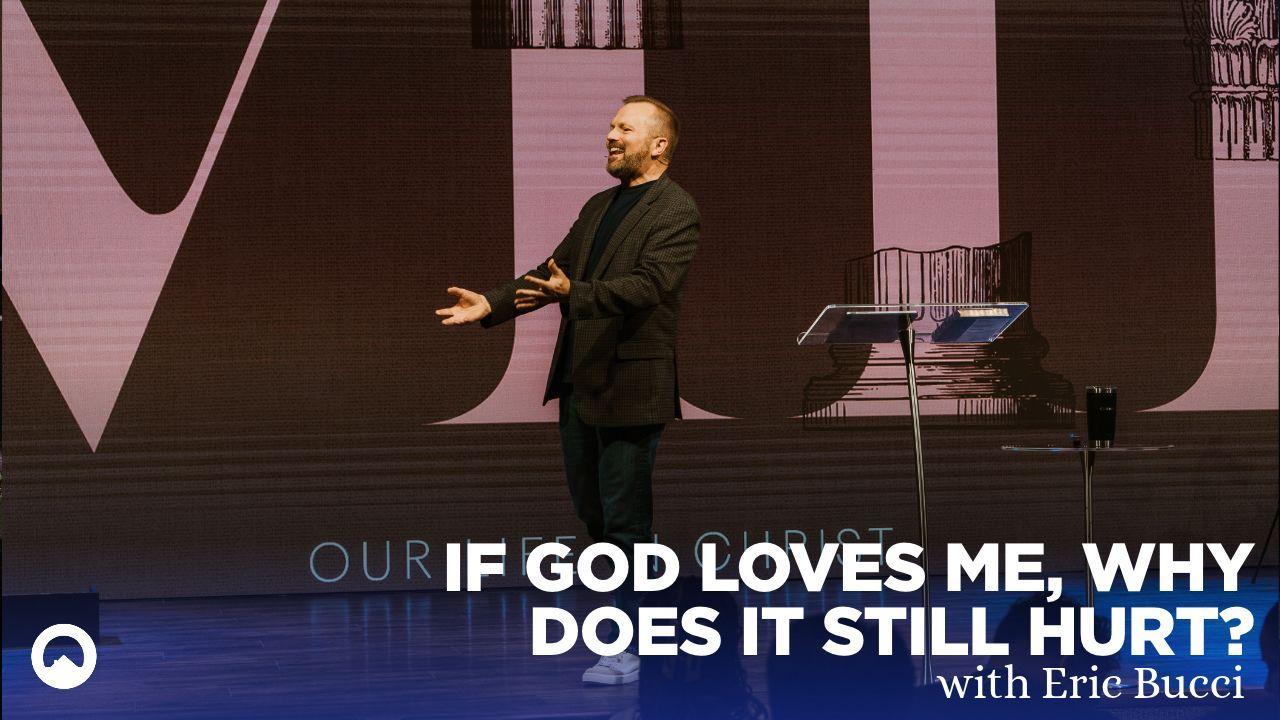
When a verse you know stops feeling true
"Thou wilt keep him in perfect peace, whose mind is stayed on thee: because he trusteth in thee" (Isaiah 26:3). Our speaker memorized this verse early in his faith. He has preached it, taught it and shared it in one-on-one discipleship. And for much of the past year, in one area of his life, he didn't believe it.
On July 31, 2024, he and his wife were enjoying a rare couple of days in New York while their kids were away at camp. Over breakfast she opened an email with the results of a recent biopsy: stage two breast cancer. In that moment it felt as if their whole world stopped. The year that followed was a blur of surgeons, oncologists, chemotherapy, radiation, immunotherapy, surgeries and hard conversations with their two teenagers. By God's grace she is now cancer-free, but it was the hardest year of his life.
Cancer had always been someone else's story — a name on a prayer list. Suddenly it was theirs. And he found that he trusted what he saw, read and heard more than he trusted God. In doing so, he proved the verse true in reverse: where there was no trust, there was no peace. And where peace is absent, anxiety and worry flood in.
Where are you without peace?
Maybe you're walking through something similar. Or maybe it's job insecurity and financial worry, a relationship in trouble, a sudden change in circumstances, or a child walking a path that scares you. And if nothing is weighing on you right now, life rarely stays problem-free for long.
So ask yourself honestly: is there one area of my life — one person, one situation, one thing on my mind — where I'm living with anxiety instead of peace because I'm not trusting God?
Then dig deeper. Am I anxious because it feels like God isn't coming through? Because I've prayed and prayed and nothing has changed? Because the answers I'm getting aren't the ones I want? Underneath all of these is a root question: do I believe God is actually good? When we don't believe God is good and trustworthy, we will live with anxiety. That's not a glib statement. It's the question our speaker wrestled with again and again through his wife's treatment.
Abram's promise and Abram's doubt
God called Abram, a man from a pagan background, to leave his country, his relatives and his father's household, and promised: "I will make of thee a great nation, and I will bless thee, and make thy name great; and thou shalt be a blessing" (Genesis 12:2). Abram acted on that promise and left everything familiar. With promises like that, he could have walked with some swagger.
We probably won't be promised descendants as numerous as the stars. But Scripture is full of promises for us. Search the Bible's promises and you'll notice that most of them aren't about God giving us a trouble-free life. They're about His presence: "Be strong and of a good courage; be not afraid, neither be thou dismayed: for the LORD thy God is with thee whithersoever thou goest" (Joshua 1:9). "Who shall separate us from the love of Christ? shall tribulation, or distress, or persecution, or famine, or nakedness, or peril, or sword?" (Romans 8:35). God doesn't promise happiness 24/7. Sometimes the miracle is that He keeps walking with us and becomes our peace in spite of life.
Years later, God appeared to Abram again: "Fear not, Abram: I am thy shield, and thy exceeding great reward" (Genesis 15:1). Abram's first response was essentially, "But where's my son?" He was clearly anxious about the promise that hadn't come true. We live in a world where people break promises constantly, so it was fair for Abram to ask: are You like everyone else? Are Your words really good?
Notice where Abram took his doubt — to God. Doubting God isn't the same as having no faith. The opposite of faith is no faith at all, refusing to engage with God. Abram wrestled honestly, and God met him, took him outside and said, "Look now toward heaven, and tell the stars... So shall thy seed be. And he believed in the LORD; and he counted it to him for righteousness" (Genesis 15:5–6). Writers like Eugene Peterson and Madeleine L'Engle have observed that real faith includes seasons of doubt and even despair. A faith that never wrestles may be faith in the idea of God rather than in God Himself. A real marriage involves honest conversation, even arguments; so does a real relationship with God.
When we take matters into our own hands
In Genesis 16, ten years after settling in Canaan, there was still no child. Sarai suggested that Abram have a child with her servant Hagar, and Abram agreed. Both were complicit. Ishmael was born, and the result was discord and heartache. In effect they said: God, Your promise isn't happening, so we'll do it ourselves.
Following God can feel like standing with one foot in the truth of Scripture and the other in circumstances that don't match it. Early on, that disconnect drives us to God with our questions. But if doubt goes unresolved, we eventually plant both feet in our circumstances and take control. We become the fixers — of the child, the relationship, the job situation. In that moment we've chosen to be God, and anxiety becomes exponential, because now everything rests on us and on a broken world.
Our speaker saw himself doing exactly that, searching online about his wife's diagnosis and watching his anxiety climb with every result. A woman named Vicki described a similar crisis of faith after a series of devastating losses. She realized she had been reading God's trustworthiness through the lens of her circumstances, when she needed to read her circumstances through the lens of God's unchanging Word. God is good, period. God is trustworthy, period — no matter how we feel. Sometimes, like the man on the desert island who turned away a lifeboat, a coast guard ship and a helicopter while waiting for God to rescue him, we miss the help God sends because it doesn't look like what we expected.
Surrender, and let peace guard you
Eventually Abram came to the end of himself, like a toddler who melts down until he's a sobbing heap and a parent scoops him up. He surrendered: You're God, and I trust You. The promise had always been coming. When the circumstances didn't change, our speaker was angry and full of questions too. But he kept bringing it to God, until he reached that same place of surrender.
He offers a paraphrase of Isaiah 26:3: You will keep me in peace in spite of unchanging circumstances or a promise that seems far away, because even though I have doubts and questions, I have chosen to trust Your words, because You are a good God, faithful to Your word.
Here's how to practice it. Write Philippians 4:6–7 on a sticky note and put it somewhere you'll see it often: "Be careful for nothing; but in every thing by prayer and supplication with thanksgiving let your requests be made known unto God. And the peace of God, which passeth all understanding, shall keep your hearts and minds through Christ Jesus." Say it again and again, even when nothing changes, even if things get worse — it's still true.
Ask the Holy Spirit to show you the area where you're anxious because you don't trust Him. Name it. Then surrender it by name, as many times as it takes: I surrender this diagnosis. I surrender my kids. I surrender this job. Circumstances may not change right away. But because God is faithful to His word, an unnatural peace will begin to guard your heart and mind. He is good. He is for you. He is beside you, and at times He is carrying you.
Key Scriptures
Thou wilt keep him in perfect peace, whose mind is stayed on thee: because he trusteth in thee.
Fear not, Abram: I am thy shield, and thy exceeding great reward... Look now toward heaven, and tell the stars, if thou be able to number them: and he said unto him, So shall thy seed be. And he believed in the LORD; and he counted it to him for righteousness.
Have not I commanded thee? Be strong and of a good courage; be not afraid, neither be thou dismayed: for the LORD thy God is with thee whithersoever thou goest.
Who shall separate us from the love of Christ? shall tribulation, or distress, or persecution, or famine, or nakedness, or peril, or sword?
Be careful for nothing; but in every thing by prayer and supplication with thanksgiving let your requests be made known unto God. And the peace of God, which passeth all understanding, shall keep your hearts and minds through Christ Jesus.
Questions to Reflect On
- Is there one area of your life where you're living with anxiety instead of peace? What is it?
- Underneath that anxiety, do you believe God is good? What makes that hard to believe right now?
- Where have you taken matters into your own hands, like Abram and Sarai? What has that produced?
- What would it look like to surrender that area by name this week, again and again?
Wrestling with this? You don’t have to do it alone.
Our pastors would love to pray with you, answer your questions, or just listen.